
Baby covering their face: The pose nobody planned
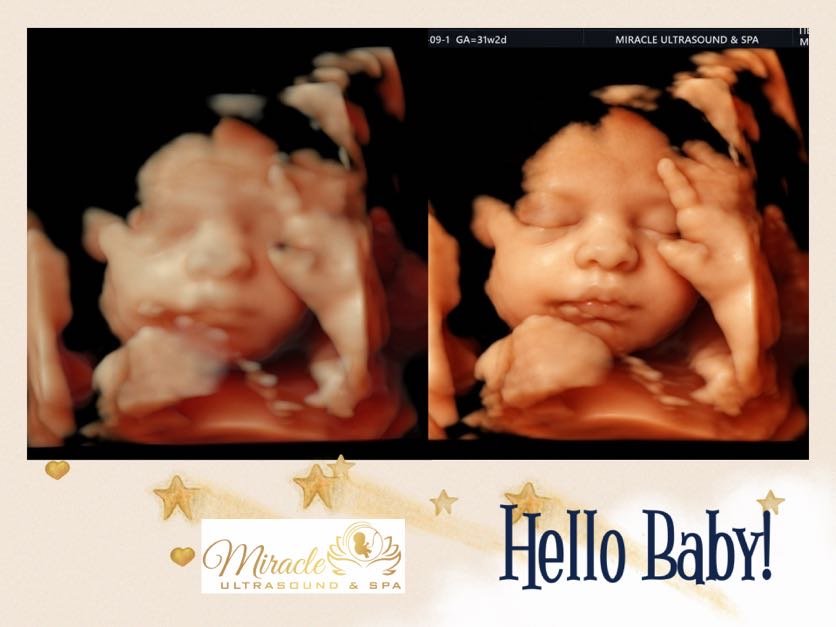
You have been looking forward to seeing your little one’s face. Then the 3D ultrasound screen shows two hands in front of the cheeks, or an arm resting across the forehead. It can be disappointing for a moment, especially if you imagined a clear portrait. It is also a common part of prenatal imaging. The little one moves and rests in positions that no one in the room can direct.
A covered face usually describes what the camera can see from that particular angle at that particular moment. It does not, by itself, tell you why your little one chose the pose or indicate a medical problem. The useful question for a keepsake visit is what may affect the viewing window and what reasonable options the provider can try during the reserved time.
At Miracle Ultrasound & Spa in Gainesville, Virginia, our elective, non-diagnostic appointments focus on bonding and keepsake views. This guide explains common reasons a face may be hidden, how a session can still be meaningful, and what to ask before booking. For medical interpretation, growth questions, symptoms, or concerns about movement, contact your prenatal healthcare provider.
Hands naturally spend time near the face
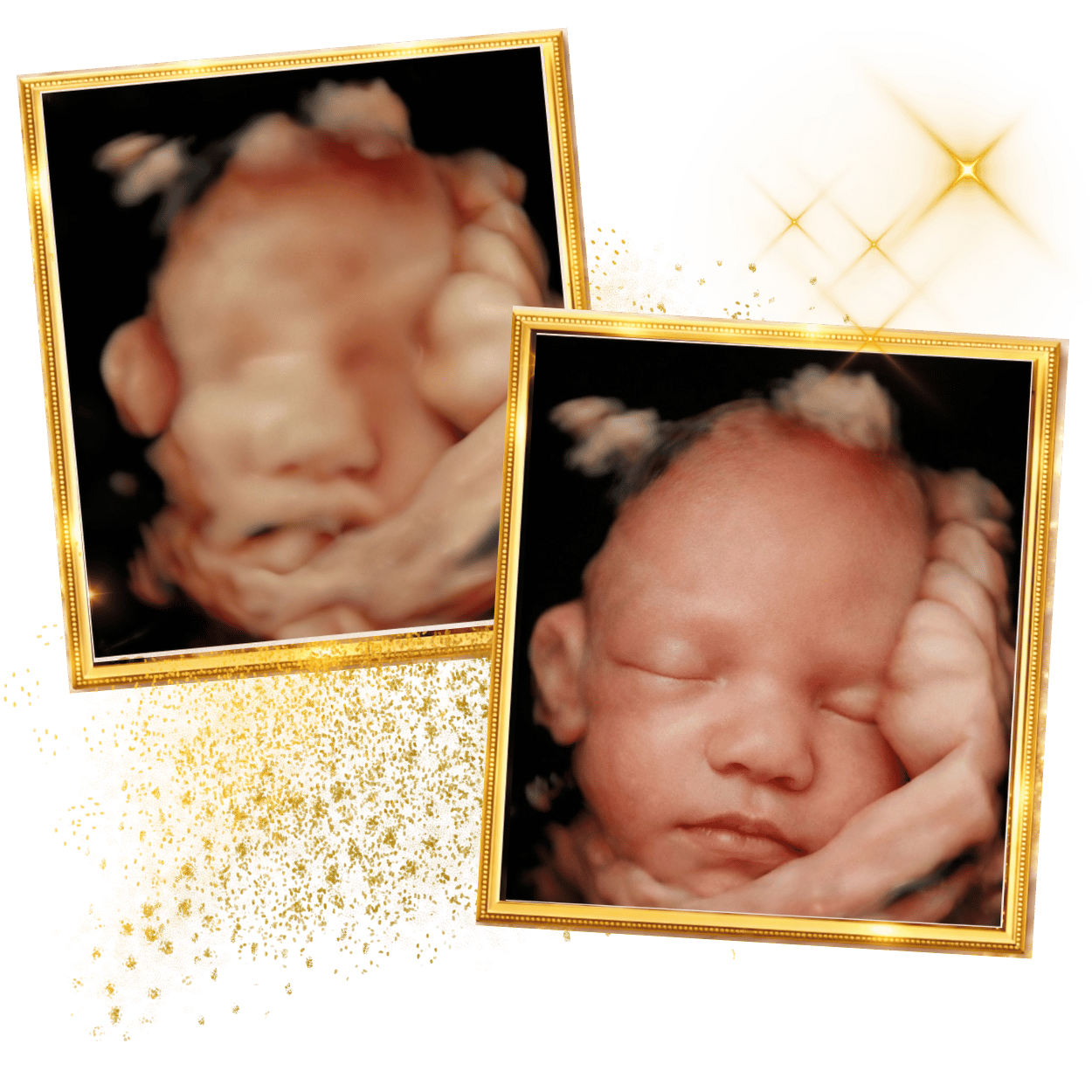
The familiar hand-on-cheek pose is often the first thing parents notice. A hand may rest beneath the chin, brush the mouth, cover an eye, or come between the face and the viewing area. Fingers can open and close while the hand stays near the lips. During 4D viewing, the motion itself may be lovely even if it prevents a straight-on portrait.
One small movement can change everything. A hand that is a little away from the cheek may create a charming image with clear facial contours. If it rests directly against the face, the surfaces may blend together in the rendered view. This is why two frames captured seconds apart can look very different.
There is no way to ask the little one to lower a hand on command. The provider may try another angle and wait briefly for natural movement. The right expectation is an opportunity to see what unfolds, not a guaranteed unobstructed face.
Position matters more than a perfect camera
A 3D ultrasound view depends on the direction the face is pointing. A forward-facing pose with open space in front may allow a clearer surface image. If the face turns toward the back, rests close to the uterine wall, or tilts sharply downward, a portrait can be difficult to obtain.
Turning also happens during the session. You may begin with a side profile, catch a short glimpse of the cheeks, and then watch the face disappear as the little one rotates. Real-time viewing lets a family appreciate this movement even if the still picture does not match the one they expected.
The provider can move the probe to explore safe viewing angles, but equipment cannot change the actual pose. More powerful rendering does not turn the back of a head into a facial portrait. An honest explanation of what is visible protects the memory and avoids promising a result no studio can control.
The placenta can affect the viewing window
An anterior placenta lies along the front wall of the uterus. Depending on where the face rests, the placenta may occupy some of the space between the face and the abdominal probe. That can change how clearly the face appears on a surface image. It does not mean that every person with an anterior placenta will have a disappointing 3D appointment.
The placenta’s position is only one factor. The little one may turn to face an open pocket, or a hand may move out of the way. Conversely, a posterior placenta does not guarantee clear photographs. Position, fluid, available space, body tissue, and the stage of pregnancy also matter.
If you have a clinical question about placental location, ask your prenatal provider to explain the finding from your medical examination. An elective keepsake session does not evaluate whether the placenta is healthy or whether its location requires medical follow-up.
Fluid in front of the face helps define edges
3D surface rendering works best when the face has a useful viewing space around it. When the cheeks or nose press directly against the placenta or uterine wall, the boundaries can be hard to distinguish. Fluid in front of the face often helps the image show contours more clearly, although no single fluid pocket guarantees a perfect view.
You cannot know in advance exactly where the fluid will sit during an elective visit. It may shift as the little one moves, and the available window may change between appointments. A face that looks partly flattened in a rendering may reflect contact with a nearby surface rather than the actual shape of the face.
Do not try to manipulate fluid levels for a photograph. Follow your healthcare provider’s hydration guidance. Drinking an unusually large amount just before a session does not reliably create the open viewing space needed for a clear image.
Feet and the umbilical cord may be nearby
Hands get most of the attention, but feet may also rise into the picture. Later in pregnancy, a curled pose can bring legs close to the head. A foot beside the cheek might become the most memorable detail of the session, even if it blocks the nose or mouth in one frame.
The umbilical cord can also appear near the face in an image. Its presence in the viewing area may obscure surface details. A single elective image is not a basis for interpreting cord position or fetal well-being. Those questions require an appropriately ordered medical examination and clinical interpretation.
Sometimes the provider can capture a profile or partial facial image around an obstruction. Sometimes the little one moves and gives a clearer window for a few seconds. These are possibilities, not promises, and the safest goal is to enjoy the available view without asking the keepsake session to diagnose what an object means.
Timing changes the kind of image you may get
Earlier in pregnancy, there may be more room for broad turns and stretches, while the face is still developing its fuller contours. As pregnancy advances, cheeks may appear rounder, but the space becomes more compact. Neither earlier nor later is automatically better for every family.
A family booking in the second trimester may love a whole-body pose or an active turn. Another visiting in the third trimester may see a close view of lips and cheeks. Both may encounter a hand over the face. Choosing the week is a practical way to pursue the kind of keepsake you want, but timing cannot eliminate the role of natural position.
Share your estimated due date and your hopes with the studio. The provider can explain the available elective packages for your stage of pregnancy. Your prenatal healthcare provider remains responsible for medical scheduling, examinations, and questions about the pregnancy itself.
What happens during the appointment if the face is hidden?
The first step is to look for another safe angle. A slight adjustment in probe position may reveal a profile, lips, or a hand beside the cheek. The provider may allow a short period for natural movement or suggest a comfortable change of position if appropriate. The exact approach depends on the person, the stage of pregnancy, and the session.
These ordinary adjustments have limits. Pushing excessively, extending a session indefinitely, or making a parent uncomfortable for the sake of one picture is not a good goal. The U.S. Food and Drug Administration advises prudent use of ultrasound and warns about unnecessary prolonged exposure for keepsake purposes. Your comfort and appropriate use matter more than a particular photograph.
Meanwhile, notice the other views. A tiny profile, a foot moving past the screen, or fingers opening near the face may tell a richer story than a single posed portrait. The live session itself can be meaningful even when the facial still image is incomplete.
Can walking or eating make the face appear?
People often suggest a walk, a cold drink, juice, or a snack as a guaranteed way to change position. No such trick reliably produces a clear 3D face for every pregnancy. Some little ones move during a session; others remain in a comfortable pose regardless of what the family tries.
Follow your prenatal provider’s advice about activity, hydration, caffeine, blood sugar, and food. This matters especially if you have diabetes, dietary restrictions, symptoms, or other medical considerations. Do not consume something you have been told to avoid merely to seek a keepsake image.
If the studio suggests a short, comfortable position change, you can decide whether it feels right for you. Ask the provider to explain what they are trying and remember that an honest “we still cannot see the face clearly” is better than a promise no one can keep.
Why some 3D faces look unusual
Parents sometimes worry when a 3D image appears lumpy, flattened, or missing part of a cheek. Surface imaging depends on what the sound waves captured and how the system rendered the boundaries. A hand touching the face, limited fluid in front of the skin, contact with the uterine wall, motion, or an incomplete angle can make a keepsake portrait look strange.
That appearance is not a diagnosis. Neither a strange-looking image nor a beautiful portrait can establish whether the anatomy is normal. Ask your medical provider any clinical questions and keep recommended prenatal scans. A keepsake provider should explain image limitations without trying to interpret an abnormality.
The best enhancement preserves the captured composition and recognizable features. It may improve lighting or clarity, but it should not paint over an obstruction and invent the face underneath. Retain the original image so you know which details were genuinely visible.
An honest rescan conversation
Miracle Ultrasound & Spa has offered rescan options when a face could not be seen, subject to current package terms. Ask about eligibility, timing, any costs, and what the policy actually covers before booking. A second appointment may provide another opportunity for a different pose, but it does not guarantee an unobstructed portrait.
Consider what would make a return visit worthwhile for your family. Some parents want another chance for a facial picture; others feel delighted by the hand-on-cheek pose and choose to keep it as the authentic memory. Either response is reasonable.
If the image remains limited after a rescan, the issue may still be position or available viewing space. It should not be interpreted as a medical finding. Reach out to your healthcare team for clinical questions or symptoms rather than scheduling repeated elective appointments to seek reassurance.
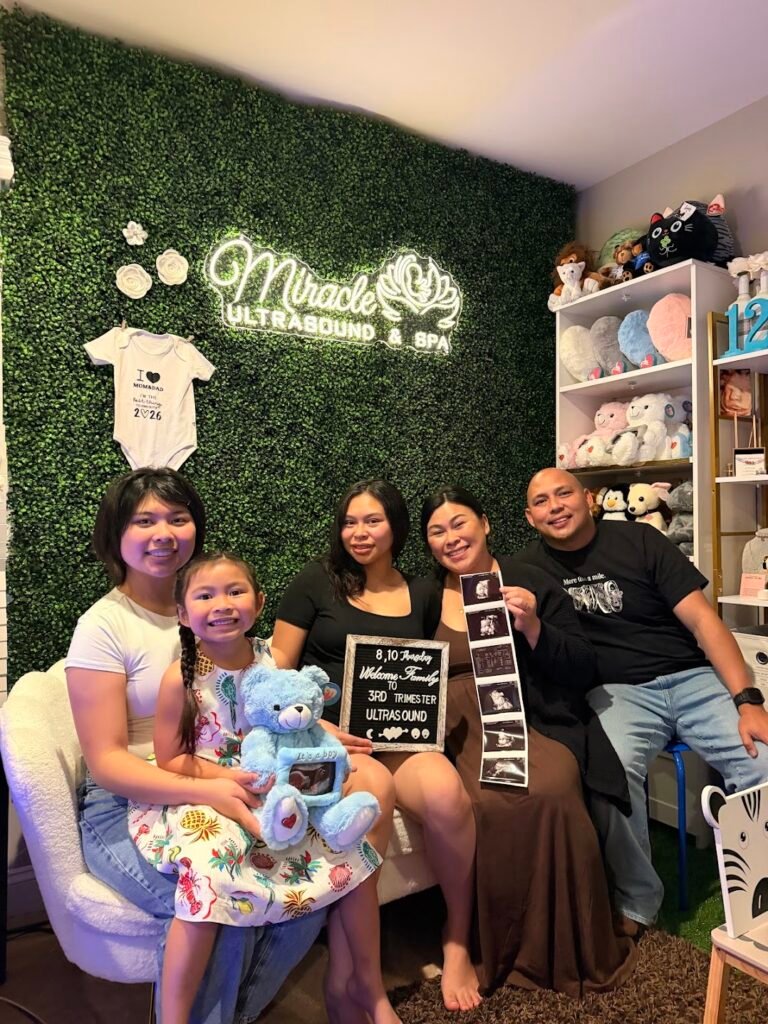
Choosing an elective package in Gainesville
The Second Trimester package is $200 for 30 minutes from 15 through 26 weeks, and the Third Trimester package is $250 for 30 minutes from 26 through 40 weeks. The VIP Second Trimester package is $299 and the VIP Third Trimester package is $350. Confirm current inclusions when you request an appointment.
For a shorter visit, the 15-minute Short Session is $165. The First Trimester package is $150 for 30 minutes through 15 weeks, though earlier facial contours will differ from later pregnancy. A $50 twin fee applies where relevant, and the current 8K or HD enhancement is $29.99. Enhancement is most useful when a reasonably clear source image already exists.
A $50 non-refundable deposit is normally applied to the balance after approval. Groupon vouchers waive that standard deposit. Booking requests need manual approval, and weekend sessions are generally available Saturday and Sunday from 8 AM to 9 PM, subject to the current schedule.
A covered face can still become a treasured memory
If a hand stays in front of the eyes, you can turn the pose into a personal story without assigning it a medical meaning. A caption such as “Already hiding from the camera” or “A little hand said hello first” conveys what the family actually saw. It can be a lovely way to share the moment with grandparents.
Some families display a sequence: one wider view, one covered face, and one profile. The series shows the movement and the personality of the appointment more faithfully than an edited single image. A short video may capture a turn or finger movement that helps relatives understand why the face was briefly visible and then hidden.
Save the image even if it is not your favorite today. After birth, the picture may remind you of a resting pose, a hand near the cheek, or the laughter in the room when everyone hoped the hand would move.
Keep medical questions with your care team
Miracle Ultrasound & Spa performs elective, non-diagnostic abdominal imaging only. The studio does not perform transvaginal scans, anatomy scans, NT screening, diagnoses, or medical reports. A covered face during a bonding visit does not tell you whether the pregnancy is healthy.
If you are worried about fetal movement, have pain, bleeding, fluid leakage, or another symptom, follow your prenatal team’s instructions and seek the appropriate medical advice promptly. Do not wait for an elective session or use a keepsake picture to decide whether care is needed.
The FDA explains that 3D ultrasound may show facial features and 4D shows that view in motion. It also encourages prudent use and discourages ultrasound solely for non-medical keepsake videos. Discuss whether additional elective imaging is appropriate for your situation with your healthcare provider.
Frequently asked questions
Is it normal for a hand to cover the face in a 3D image? Hands commonly appear near the face during a session. An elective picture alone cannot explain why the pose occurred or provide medical reassurance.
Will a later appointment guarantee a clear face? No. Fullness and available space change with time, while position remains unpredictable. Ask about the studio’s current rescan terms.
Does an anterior placenta make clear pictures impossible? No. It can affect the window depending on where the face rests, but clear views may still be possible. Ask your medical provider questions about your placenta.
Can 8K enhancement remove the hand? Enhancement can improve a captured image’s presentation. It cannot faithfully reveal a face that the hand completely hid.
What if the face looks flattened? Contact with nearby structures or an incomplete rendering can change the look. A medical concern requires evaluation by your prenatal healthcare provider.
Should I drink lots of water right before the session? Follow your normal hydration routine and your medical provider’s advice. A large amount immediately before an appointment cannot guarantee a clearer image.
Can a provider reposition the little one? A provider can try different viewing angles or a comfortable position change for the parent. A specific pose cannot be forced or promised.
Does a covered face mean something is wrong? An elective image alone cannot answer that question. Bring health concerns to your medical provider.
Enjoy the view that is actually there
A 3D ultrasound face may be covered by a hand, a foot, the cord, or a nearby surface. The position can change in seconds or remain the same throughout a visit. Understanding these factors helps families arrive with realistic expectations and appreciate the gestures that do appear.
If you are looking for a 3D ultrasound in Gainesville, VA, Miracle Ultrasound & Spa welcomes families from Haymarket, Bristow, Manassas, Centreville, Warrenton, Woodbridge, and surrounding Northern Virginia communities. Share your estimated due date and your goals when requesting an elective session. We will help you choose a package and explain the current rescan policy, while your healthcare team remains your source for medical care.
Book here for a reservation now: https://miracleultrasoundspa.com/book-online/
Editorial reference
For information on 3D and 4D imaging, prudent use, and the limits of non-medical keepsake scanning, see the U.S. Food and Drug Administration’s ultrasound imaging guidance:
https://www.fda.gov/radiation-emitting-products/medical-imaging/ultrasound-imaging

 Open in Google Maps