
One ultrasound visit can create many different portraits
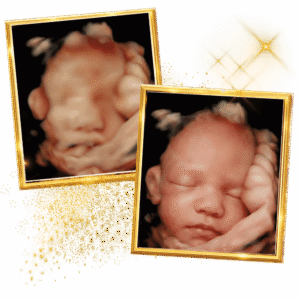
Families are sometimes surprised when two pictures saved minutes apart seem to show different noses, cheeks, or face shapes. The baby did not suddenly change. The view changed. A slight turn, moving hand, new shadow, or different angle can alter which surface contours are available to the system.
Think about ordinary photographs. A face looks different in direct light, side light, profile, motion, and close-up. Ultrasound adds more variables because it creates a representation from sound returning through fluid and tissue. The result is a meaningful glimpse, but it is not a studio photograph with fixed lighting.
This explains why choosing a favorite is personal. One image may have the clearest profile, another may show full cheeks, and a third may capture the sweetest hand position. Together they tell a more complete story than any single frame.
Tiny movements can change everything
A small head turn may reveal one cheek and hide the other. Fingers can move across the lips between frames. A foot that was out of view can appear beside the forehead. In 4D, these changes happen in real time, so a sequence of still images may look surprisingly varied.
Movement can also create softness or streak-like edges when a frame is captured mid-motion. A quieter moment may look sharper. Neither image says anything medical about activity. Concerns about movement should be discussed with the prenatal provider according to the instructions they have given you.
The variety is part of the appeal. Instead of expecting repeated copies of one pose, families can watch a short, natural performance that may include stretching, turning, covering the face, opening the mouth, or resting.
Viewing angle changes facial proportions
A front-facing view, three-quarter view, and side profile emphasize different features. A nose may look broader from the front and more defined in profile. One cheek may appear larger when it is closer to the viewing angle. The chin can seem shorter when tucked toward the chest.
Perspective does not mean the image is wrong. It means the picture represents a particular angle. Comparing different angles as if they were identical can create unnecessary concern. The provider looks for a clean window, but the baby’s orientation determines which perspective is possible.
When saving favorites, choose images for different reasons. Keep the clearest profile, the most recognizable full face, and the most charming candid pose. A varied set often feels more authentic than multiple nearly identical pictures.
Shadows can reshape the picture
Hands, cord, placenta, uterine wall, and limbs can block or change the returning information. The rendered image may show a dark area, incomplete edge, or shape that appears connected to the face. When the obstruction moves, the next picture can look completely different.
Settings such as gain and depth affect presentation too. Adjusting them can make edges look softer or stronger. Good technique aims for a natural, readable image without pretending that the rendering is a literal photograph.
If an image appears unusual, do not diagnose it yourself or compare it with internet pictures. Elective images are not intended for anatomy interpretation. Direct medical questions to the clinician responsible for prenatal care.
Contact with nearby tissue changes contours
When the cheek is close to placenta or uterine wall, the surface may look flattened or partially blended. When a pocket of fluid appears between them, the contour can become more distinct. A simple turn can therefore make the face seem rounder, narrower, or more complete.
The same principle applies when hands rest against the mouth or eyes. One frame may capture the fingers clearly; another may combine the boundaries. The rendering is responding to available separation, not predicting the newborn’s exact appearance.
This is one reason enhanced portraits should be based on the strongest original frame. More usable source information supports a more natural result.
Why 4D video often makes the images easier to understand
A still frame removes the moments before and after it. In a 4D sequence, families can see that a mysterious shape is a hand passing the cheek or that a soft edge appears while the head turns. Motion provides context.
The video may also reveal expressions and habits that a still picture cannot convey. A yawn-like opening, stretch, or hand-to-face movement can feel more recognizable than a perfectly clear portrait. Families often remember the sequence and the room’s reaction as much as the saved image.
When sharing a still online, remember that viewers do not have that motion context. A short caption explaining the pose can prevent relatives from overinterpreting shadows.
Why two appointments can look different
Position and available space can change from day to day, and facial fullness changes with gestational age. An earlier session may show more body and active movement. A later session may show fuller cheeks but less room. The placenta remains important to the viewing window, while the baby’s orientation may change repeatedly.
Equipment presets, selected angles, and the person operating the system can also influence presentation. That does not make one session genuine and another false. Each captures a different moment under different conditions.
Use repeat visits to document stages rather than trying to reproduce the same portrait. Label each image with the pregnancy week and write down what the baby was doing. The differences become part of the timeline.
Choosing the most natural picture
Start with visibility. Look for a frame where the main features are separated from hands and nearby tissue. Then consider expression and meaning. The sharpest image is not always the family favorite; a softer frame with a familiar pose may feel more personal.
Avoid judging the face from one awkward frame. Review several views and, when available, the motion sequence. Remember that surface rendering, perspective, and contact can exaggerate or hide contours.
For enhancement, select an image with a clean angle and the least obstruction. Ask what the enhancement changes and keep expectations realistic. The finished keepsake should remain connected to the captured view.
Frequently asked questions about changing 3D pictures
Why does the nose look different in every picture? Angle, shadow, movement, and contact with nearby tissue can change its apparent width and shape.
Can the baby’s face really change within minutes? The baby can change position and expression, but dramatic visual differences usually reflect the changing view and rendering.
Does a strange-looking frame mean something is wrong? An elective surface image cannot answer that question. Speak with your medical provider about anatomy or health concerns.
Why is one side of the face clearer? The other side may be shadowed, covered, farther from the viewing window, or close to surrounding tissue.
Which picture should I choose for 8K enhancement? Choose a recognizable, unobstructed source image with clear separation around the face.
Will a rescan produce the same face? No. A later session captures new conditions and position, so results may differ and cannot be guaranteed.
Every picture belongs to the same story
Why does every 3D ultrasound picture look different, even during the same visit? Because each frame records a new combination of angle, movement, shadow, position, and available surface information. Variation is expected and often makes the collection more meaningful.
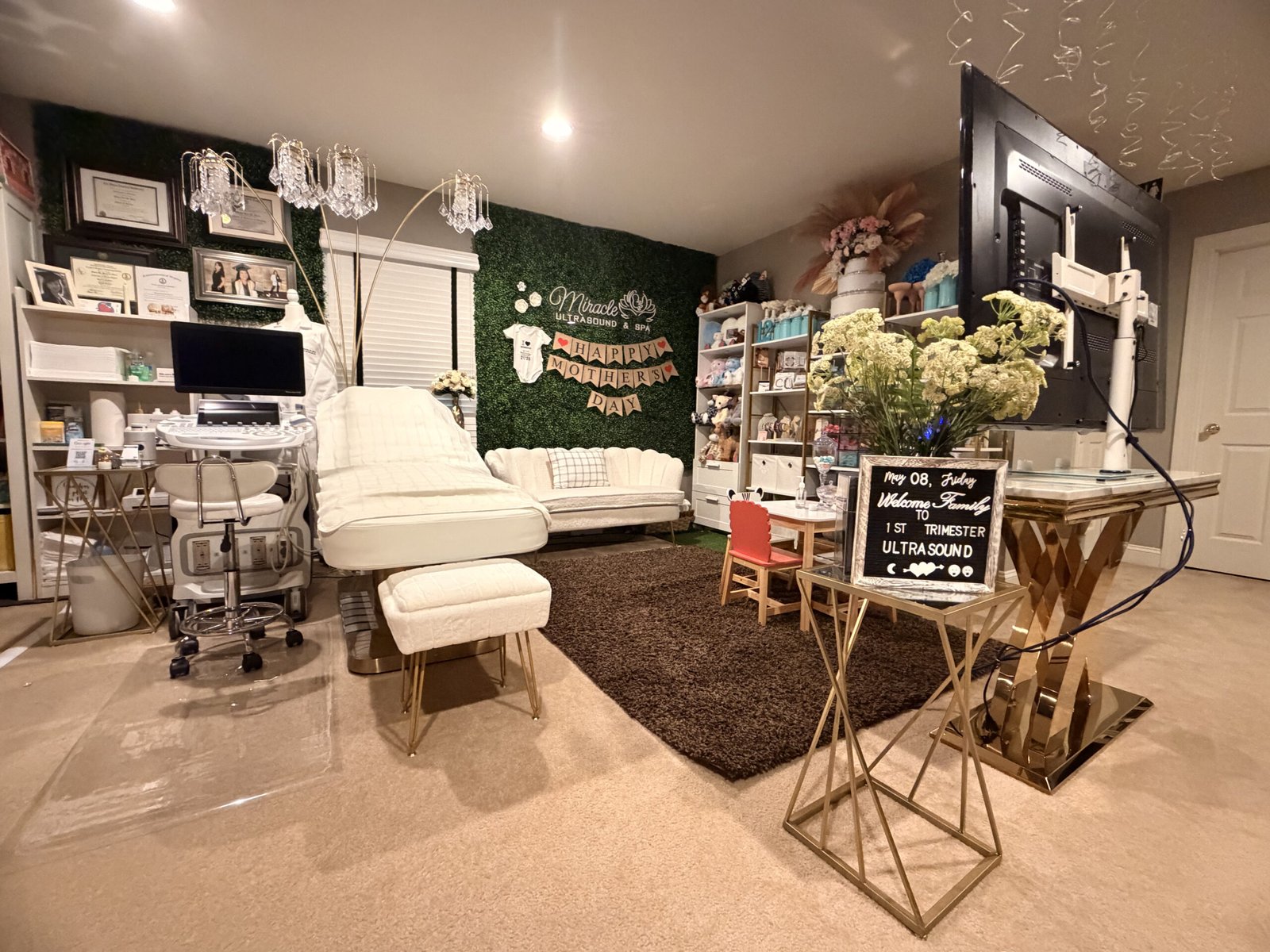
During a private session at Miracle Ultrasound & Spa in Gainesville, VA, families can enjoy the changing views instead of searching for one flawless image. The profile, covered face, tiny stretch, and clearest portrait all belong to the same first family story.
What 3D and 4D imaging actually shows
Ultrasound creates images from returning sound-wave information; it is not a camera taking a photograph inside the womb. A 3D view combines information to display surface contours with depth. A 4D view presents those three-dimensional images in motion. Families may recognize cheeks, lips, a profile, hands, feet, stretches, or quiet resting poses, but every view depends on the information available at that exact moment.
The picture on the screen is influenced by gestational age, position, movement, nearby tissue, the sound path, and the amount of fluid in front of the area being viewed. If a hand covers the mouth, the system cannot see through it. If the face is close to the placenta or uterine wall, part of the contour may look pressed, shadowed, or incomplete. That appearance should not be interpreted as a medical finding during an elective visit.
Miracle Ultrasound & Spa provides abdominal, elective, non-diagnostic bonding experiences. The studio does not perform anatomy scans, NT scans, transvaginal examinations, medical diagnoses, or medical reports. A keepsake session complements prenatal care; it never replaces an examination ordered by an obstetrician, midwife, maternal-fetal medicine specialist, or other qualified clinician.
Choosing a package at Miracle Ultrasound and Spa
The current First Trimester Sneak Peek is $175 for 25 minutes and is designed for pregnancies from 6 through 14 weeks. It includes multiple 2D images and video clips, heartbeat viewing when detectable, views of the gestational sac and yolk sac when visible, keepsake measurements, five black-and-white prints, same-day digital images, and no guest limit. Early sessions focus on the pregnancy stage rather than promising detailed facial portraits.
The current Second Trimester Gender Reveal package is $225 for 30 minutes from 15 through 25 weeks. It includes heartbeat listening, multiple 2D, 3D, and 4D HD images and videos, five black-and-white prints, two color prints, same-day digital images, optional keepsake measurements and gender determination, a family photo with instant sharing, no guest limit, and a success guarantee with a free rescan when the baby is not cooperating under the posted terms.
The Third Trimester Prime Time package is listed for 26 through 40 weeks. It includes a 30-minute experience, heartbeat listening and recording, multiple 2D, 3D, and 4D HD images and videos, five black-and-white prints, two color prints, same-day digital images, optional keepsake measurements and gender determination, a family photo, no guest limit, and the posted success guarantee. Confirm the current price and every inclusion on the booking page before publication or purchase because promotions and package details can change.
Shorter choices currently include First Wave for very early pregnancy, Quick Peek at $135 for 10 minutes for pregnancies under 14 weeks, Second Wave at $155 for 10 minutes for pregnancies under 20 weeks, and Star Baby at $185 for 15 minutes for face-focused 3D and 4D bonding under 25 weeks. Quick sessions allow one guest. Star Baby does not include measurements or gender determination. An 8K or HD enhancement, heartbeat keepsakes, VIP experiences, mobile service, and a twin fee may also be available; confirm current terms before booking.
Preparing for a relaxing private appointment
Follow the preparation instructions in your approved appointment confirmation rather than relying on a one-size-fits-all tip from social media. Wear comfortable clothing that allows access to the abdomen. Arrive on time and allow extra travel time on busy Northern Virginia weekends. The private, appointment-only Gainesville studio welcomes families from Haymarket, Bristow, Manassas, Nokesville, Centreville, Warrenton, Fairfax, Woodbridge, South Riding, and surrounding communities.
Choose guests who help the expectant parent feel calm. Current full-length sessions welcome family and friends without a guest limit, while the shorter ten-minute experiences are designed for one guest. Check the latest policy before arrival. If children are attending, explain that the little one on the screen may be turned away, sleeping, moving quickly, or covering the face.
Online requests require approval. A date and time are not secured until the required deposit is received and the appointment is confirmed. Review the current deposit, rescheduling, mobile travel, Groupon, success-guarantee, and rescan terms before paying. If a specific image is connected to a shower or announcement, keep the plan flexible because no studio can guarantee a particular pose.
Keeping expectations realistic
A clear portrait is a possibility, not a promise. The provider can work with safe angles, adjust settings, and allow time for natural movement, but cannot force a baby to turn or move a hand. A face may be visible for only a few seconds, and a quick candid moment may become the favorite image of the entire visit.
Do not compare your results with another family’s pictures as though they were created under identical conditions. Pregnancy week, body, position, placenta, fluid, movement, equipment settings, and viewing angle all vary. Even two appointments for the same pregnancy can look dramatically different.
The most satisfying sessions usually begin with a broad goal: spend time together, watch natural movement, and preserve the best view available. A profile, foot, stretch, hand beside the cheek, or peaceful curled pose can tell the story beautifully even when a front-facing portrait is not available.
Prudent use and medical care
The U.S. Food and Drug Administration explains that ultrasound uses sound waves rather than ionizing radiation. It describes 3D imaging as a way to visualize surface features and 4D imaging as 3D in motion. The FDA also encourages prudent use and discourages unnecessary prolonged exposure for non-medical keepsake purposes.
Discuss optional sessions with your prenatal provider, especially if the pregnancy is high risk or you have questions about added imaging. Never use the appearance of a keepsake picture, visible heartbeat, or movement to decide whether a pregnancy is healthy. Medical assessment belongs with the clinical team.
If you experience pain, bleeding, fluid leakage, a meaningful change in movement, or another concerning symptom, follow your provider’s instructions promptly. Do not wait for an elective appointment. Miracle Ultrasound & Spa keeps the experience focused on bonding and directs health questions to qualified medical professionals.
Protecting and sharing your keepsakes
Save original digital files in two secure places and keep printed pictures away from direct sunlight, heat, and moisture. When posting online, crop out the expectant parent’s full name, date of birth, appointment details, or other identifiers that may appear around the image.
An enhanced image can refine tone, lighting, and the presentation of contours that were captured. It cannot truthfully recreate a face hidden behind a hand, foot, cord, placenta, sibling, or uterine wall. Keep the original with any enhanced version and treat enhancement as keepsake artwork, not a medical reconstruction or an exact prediction of newborn appearance.
Add context to the family archive. Record the date, pregnancy week, people who attended, favorite movement, and everyone’s reaction. Years later, those details may be more meaningful than whether the session produced a technically perfect portrait.
Making the experience part of your pregnancy story
A private session can mark a milestone, introduce an older sibling, include grandparents, or give partners time to pause together. Keep the celebration centered on connection rather than comparison. Every pregnancy and every viewing window is different, so another family’s images are not a standard your appointment must match.
After the visit, choose one favorite image or clip and write down why it mattered. Perhaps it was the first recognizable profile, a hand beside the cheek, or the reaction of someone you love. That small note turns a digital file into a family story and preserves the feeling of the day alongside the picture.
The most valuable keepsake is often the one that brings everyone back to that shared moment.
Editorial references
U.S. Food and Drug Administration, Ultrasound Imaging:
Miracle Ultrasound & Spa, current services and booking details: https://miracleultrasoundspa.com/

 Open in Google Maps